
Acne isn’t one condition. It’s a handful of different skin problems that all get lumped under the same word, and each one responds to a different approach. Treating fungal acne with a benzoyl peroxide routine meant for bacterial breakouts, for example, usually makes it worse, not better. Knowing which type you actually have is the first real step toward clearing it, and toward avoiding the scarring that untreated or mistreated acne often leaves behind.
Non-Inflammatory Acne: Blackheads And Whiteheads
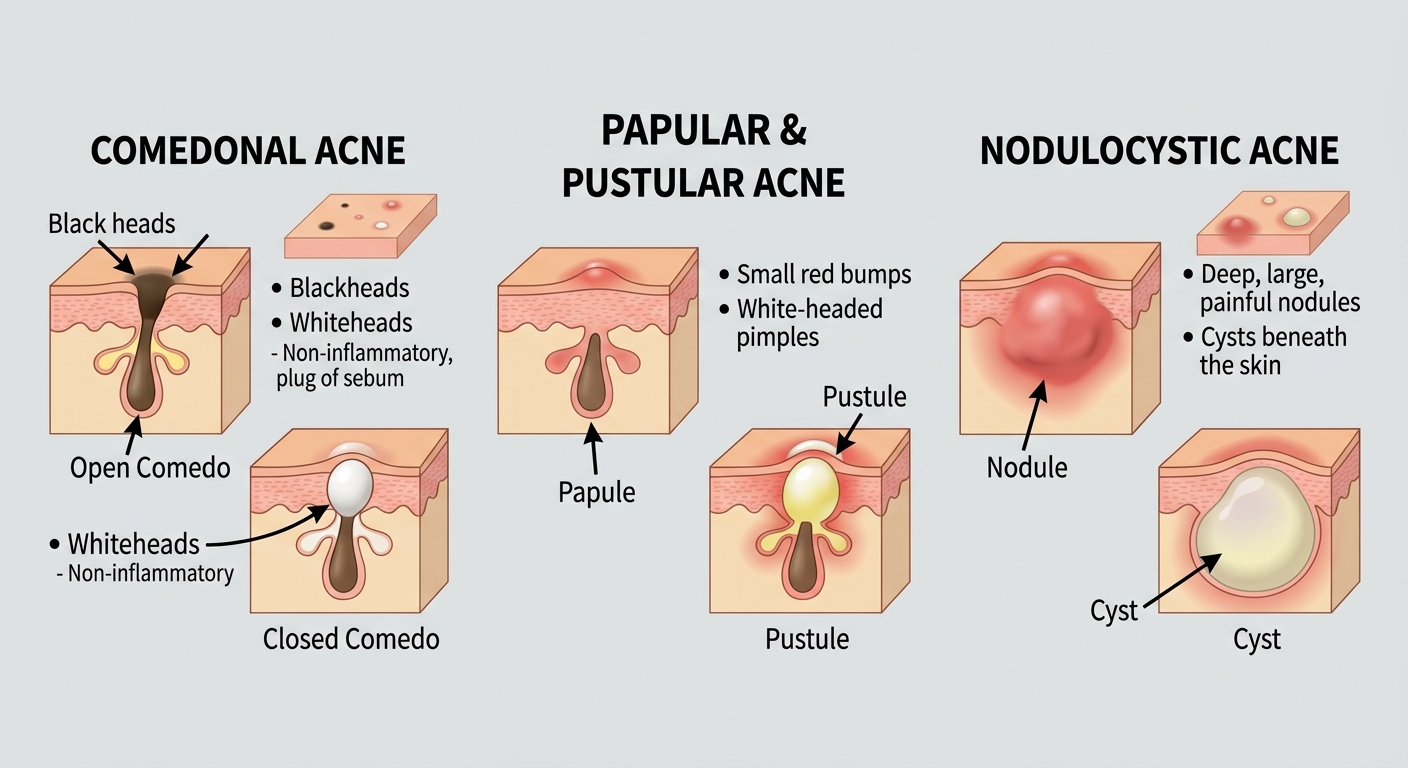
This is the mildest and most common form, and it starts the same way almost all acne does: a pore gets blocked with oil and dead skin cells. An open comedone, better known as a blackhead, forms when that blockage stays exposed to air and oxidizes to a dark color. A closed comedone, a whitehead, forms when the pore seals over the blockage instead.
Comedonal acne usually heals without leaving a mark, which is one reason it’s often dismissed as “not serious.” It still deserves proper treatment, since leaving it unmanaged is often what allows it to progress into the inflammatory stages below.
Inflammatory Acne: Papules, Pustules, Nodules, And Cysts
Once a clogged pore becomes infected or irritated, it turns into one of several inflammatory lesion types, and severity climbs in roughly this order.
Papules are small, red, tender bumps without a visible head. Pustules are the same thing with pus at the center, what most people picture when they hear “pimple.” Both usually fade with some redness or a temporary dark mark, but rarely leave lasting texture behind.
Nodules are a different problem. They’re larger, harder, and sit deeper in the skin, often painful to the touch, and they don’t respond well to over-the-counter treatment because the inflammation is happening below where topical products can reach. A chemical peel can help calm active inflammatory breakouts alongside a proper treatment plan, though nodules and cysts specifically often need more than a peel alone. Cysts go a step further, soft, pus-filled, and the most likely of all acne types to leave permanent scarring if left untreated.
If you’re noticing repeated nodules or cysts, that’s usually the point where a dermatologist or aesthetic clinic, not a drugstore aisle, is the right next step.
Fungal Acne: The One That Isn’t Really Acne
This one trips a lot of people up, including those who’ve tried every acne product available with no results. Fungal acne, medically called pityrosporum folliculitis, isn’t caused by the same bacteria as regular acne. It’s an overgrowth of yeast that naturally lives on skin, and it shows up as small, uniform, itchy bumps, often across the chest, back, or hairline, rather than the varied bump sizes typical of bacterial acne.
Standard acne treatments can make fungal acne worse rather than better, since some of those products strip the skin in ways that let yeast thrive. It needs an antifungal approach instead, which is exactly why an accurate diagnosis matters before spending months on the wrong routine.
Hormonal Acne: A Category Of Its Own
Hormonal acne deserves a fuller explanation of its own, including its connection to PCOS, since that goes well beyond what fits in this overview. In short, it tends to show up along the jawline and chin, flares around hormonal cycles, and often needs a different treatment approach than surface-level acne. A dedicated guide on this is coming, but if you suspect this is your pattern, it’s worth mentioning at your consultation specifically.
Why Getting The Type Right Matters
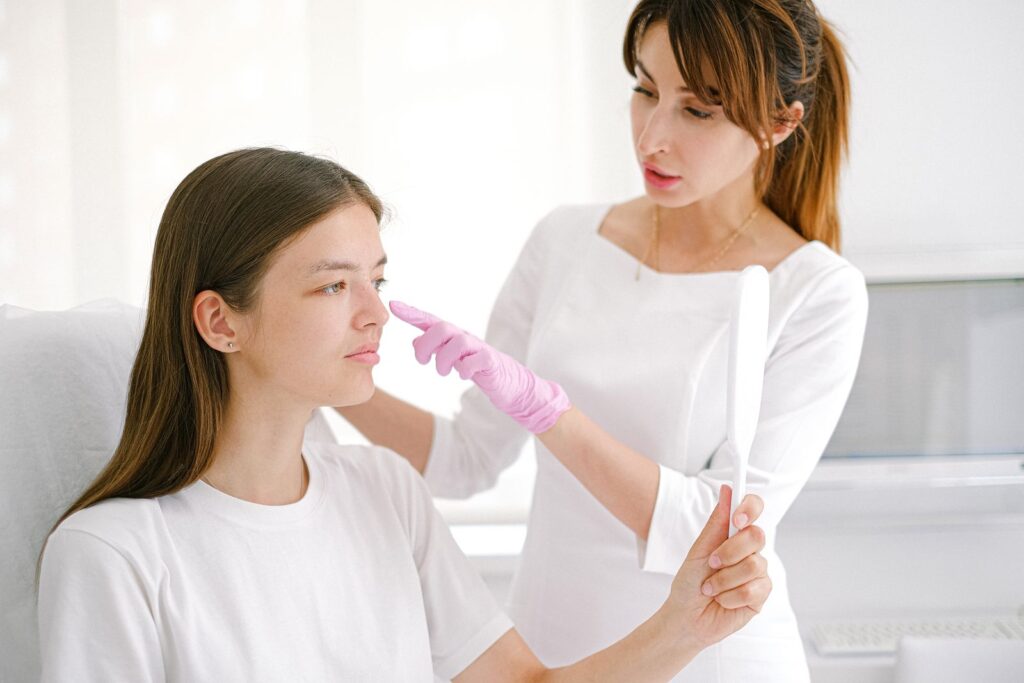
Acne type isn’t just a labeling exercise. It changes what actually works and how much is at stake if it’s left alone: comedonal acne is mostly a cosmetic concern, fungal acne gets worse if you treat it with the wrong medicine, and nodulocystic acne carries a real, lasting risk of scarring the longer it goes unaddressed.
That last point is worth sitting with if you’ve had breakouts for a while. A lot of the acne scar treatment conversations we have at BioFlex start with someone who managed their acne on their own for years, only to be left with the scarring that came out of it. Treating active acne properly, before it scars, is almost always easier and cheaper than treating the scars afterward.
Frequently Asked Questions
Can I have more than one type of acne at once?
Yes, this is common. Someone might have blackheads on the nose alongside inflammatory papules on the cheeks, for example.
How do I know if my acne is fungal or bacterial?
Fungal acne tends to look more uniform in size, itch more than regular acne, and cluster on the chest, back, or hairline. A dermatologist can confirm it, since the treatments are different enough that guessing wrong wastes time.
Does mild acne need professional treatment?
Not always, but if over-the-counter products aren’t working after a couple of months, or if breakouts keep coming back in the same spots, it’s worth a professional opinion before it progresses.
Can acne come back after it clears?
Yes, especially if the underlying trigger, whether that’s hormones, skincare habits, or something else, hasn’t changed.
When should I worry about scarring?
Nodules and cysts carry the highest scarring risk. If you’re getting these regularly, treating the acne itself early is the best way to avoid needing scar treatment later.
Ready To Find Out What’s Causing Your Breakouts?
A proper assessment can tell you which type of acne you’re dealing with and what will actually work for it. Book a consultation at BioFlex Aesthetics in Islamabad, Karachi, Peshawar, or Rawalpindi.
Written by: BioFlex Aesthetics Editorial Team
Reviewed by: Dr Aneeqa Fayyaz
Credentials: MBBS, Dermatologist/Aesthetic Physician
PMDC Registration: 83250
Last Medically Reviewed: October 2026

One Response