
Written by: BioFlex Aesthetics Editorial Team
Reviewed by: Dr. Maria Ahmed
Credentials: MBBS, Dermatologist/Aesthetic Physician
PMDC Registration: 625405
Last Medically Reviewed: August 2026
Last Updated: August 2026
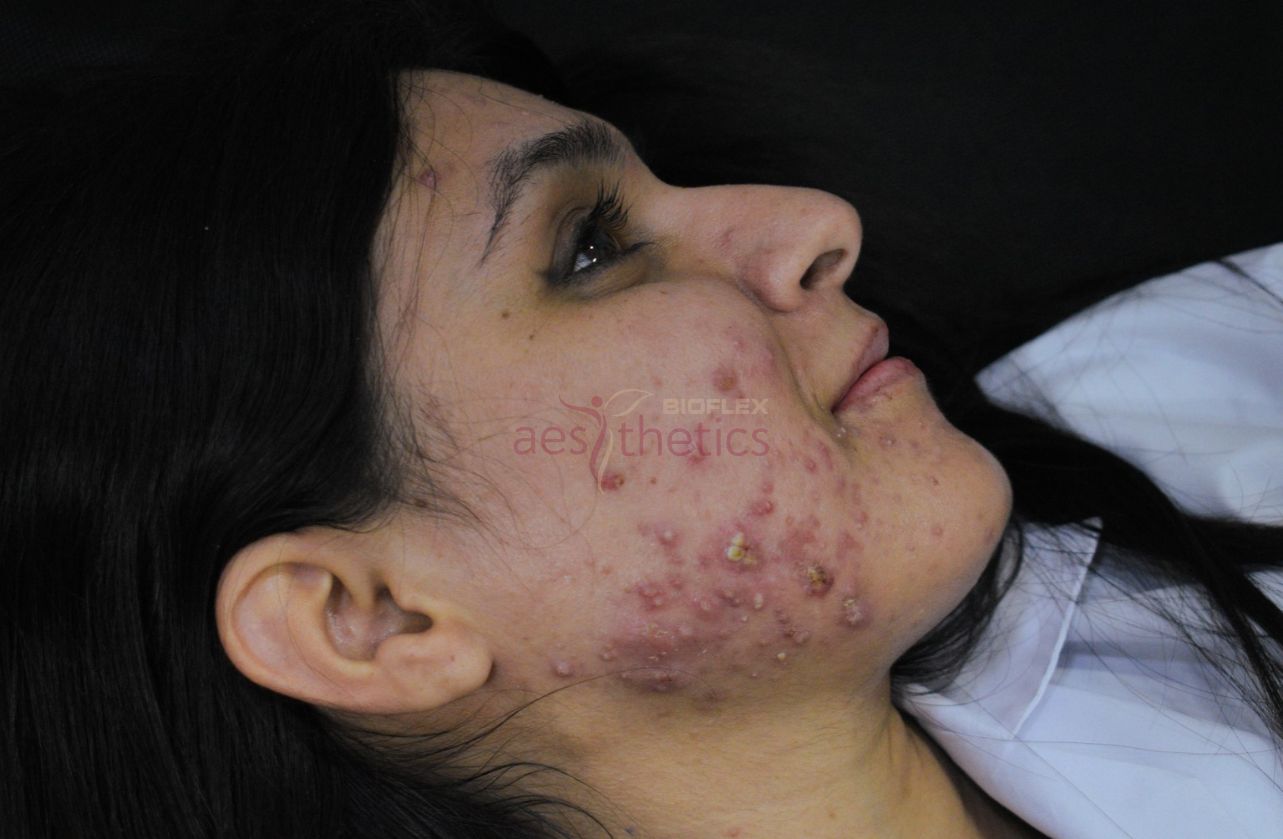
Acne may begin with a few blocked pores, but it can develop into painful breakouts, dark marks and permanent changes in skin texture. For many people, these concerns continue long after the active spots have settled.
Professional acne scar treatment in Pakistan is not based on one standard procedure. The right plan depends on whether you have active acne, flat post-acne marks, indented scars, raised scars or a combination of concerns.
Skin tone also matters. Pakistani skin may be more likely to develop post-inflammatory hyperpigmentation after acne or an unsuitable procedure. Treatment must therefore balance visible improvement with careful control of inflammation and pigment risk.
Quick answer: Acne scars may be improved through treatments such as radiofrequency microneedling, professionally selected chemical peels and platelet-rich plasma therapy. HydraFacial may support congested or acne-prone skin, while BioFlex also offers Plasma Fusion for selected acne and texture concerns. The correct option should be chosen after assessing your acne activity, scar type, skin tone and medical history.
At BioFlex Aesthetics, available acne-related options include HydraFacial, chemical peels, Face PRP, PRP Mesotherapy, BioFlex Aesthetic VIVA radiofrequency microneedling and Plasma Fusion. Treatment plans are personalised rather than applying the same procedure to every patient. BioFlex currently serves patients through five locations across Islamabad, Rawalpindi, Karachi and Peshawar.
Acne Scar Treatment at a Glance
| Concern | What it looks like | Treatment that may be considered |
| Active acne | Blackheads, whiteheads, inflamed spots or deeper breakouts | Acne-focused assessment, HydraFacial or a selected chemical peel |
| Post-acne marks | Flat brown, grey, red or purple areas | Sun protection, acne control and a professionally selected peel |
| Enlarged pores | Visible pores with oily or uneven texture | HydraFacial, chemical peel, RF microneedling or PRP |
| Rolling scars | Broad, shallow depressions with a wavy appearance | VIVA RF microneedling, sometimes combined with PRP |
| Boxcar scars | Round or oval depressions with clearer edges | RF microneedling, selected peel or a staged combination |
| Ice-pick scars | Narrow, deep pits | Detailed specialist assessment; clinic procedures may have limited effect when used alone |
| Raised scars | Firm or thickened areas above the skin | Dermatologist-led assessment before any resurfacing procedure |
| Mixed scarring | Marks, enlarged pores and several scar types together | A staged combination based on the dominant concerns |
No treatment can promise complete scar removal. The goal is usually to soften scars, improve skin texture, reduce contrast and make the overall complexion look more even.
Table of Contents
- What acne is
- Acne marks versus acne scars
- Types of acne scars
- Why acne scars develop
- Why Pakistani skin needs careful treatment
- How acne scars are assessed
- Treatments available at BioFlex Aesthetics
- How treatments compare
- Combination treatment
- Sessions, results and recovery
- Acne scar treatment cost in Pakistan
- Risks and suitability
- Beforecare and aftercare
- Preventing new acne scars
- Frequently asked questions
- Booking a consultation
What Is Acne?
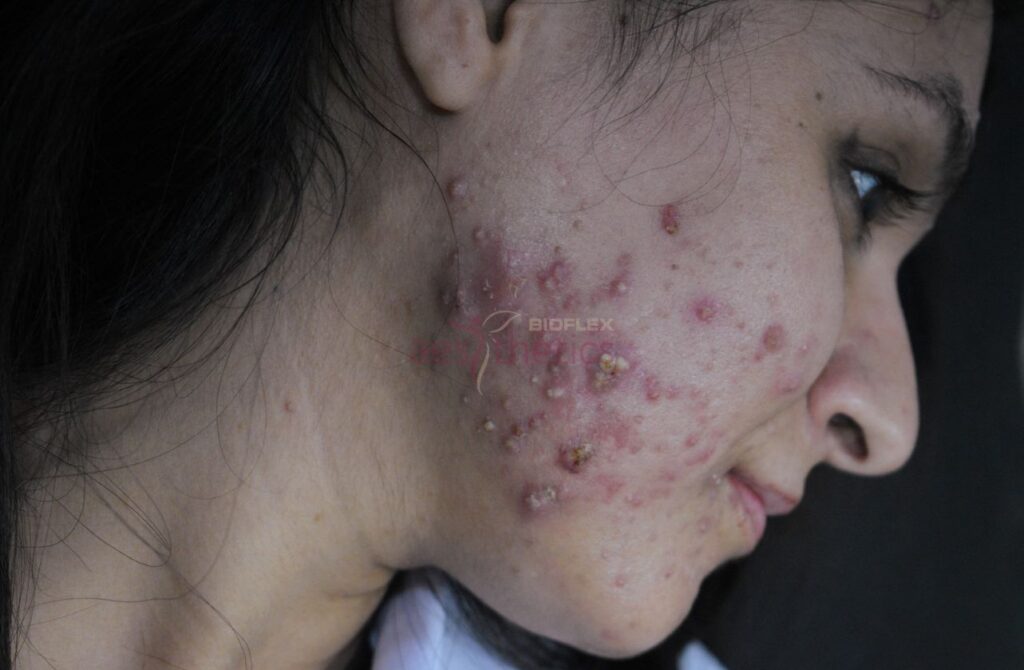
Acne, also called acne vulgaris, is an inflammatory skin condition involving the hair follicles and oil-producing glands. It develops when oil and dead skin cells collect inside a follicle. Inflammation and bacteria may then contribute to swollen or painful lesions.
Acne commonly affects the face, but it can also appear on the chest, shoulders and back. The National Institute of Arthritis and Musculoskeletal and Skin Diseases describes acne as a condition caused by clogged hair follicles beneath the skin.
Acne may appear as:
- Whiteheads: Closed, blocked follicles
- Blackheads: Open, blocked follicles
- Papules: Small, inflamed bumps
- Pustules: Inflamed spots containing pus
- Nodules: Deep, firm and painful lesions
- Cysts: Deep inflammatory lesions that may contain fluid or pus
Nodules and cysts have a higher risk of causing permanent scars because the inflammation reaches deeper layers of the skin.
What Causes Acne?
Acne usually develops through several connected factors:
- Excess oil production
- Blocked follicles
- Inflammation
- Hormonal changes
- Genetic tendency
- Certain medicines
- Unsuitable skincare or hair products
- Friction from helmets, masks or tight clothing
- Picking and squeezing existing spots
Acne is not simply caused by poor hygiene. Scrubbing the face aggressively can damage the skin barrier and make redness, sensitivity and inflammation worse.
What Is the Difference Between Acne Marks and Acne Scars?
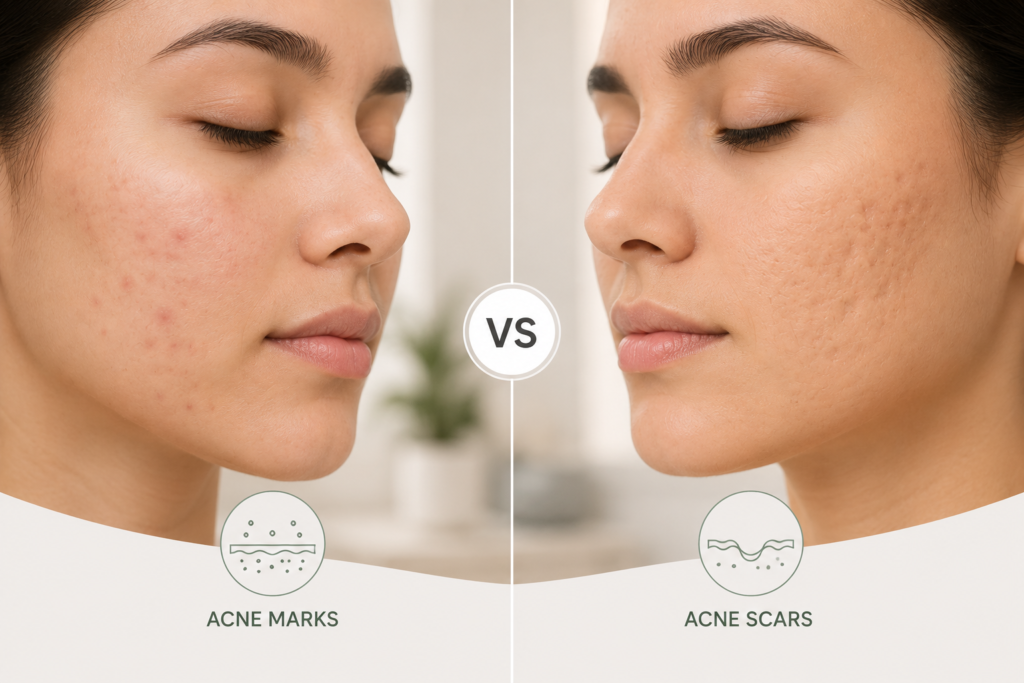
Acne marks are flat areas of discolouration left after inflammation. Acne scars change the skin’s texture and may appear indented or raised. Marks and scars need different treatment strategies.
Many people use the phrase “acne scars” for every mark left after a breakout. Medically, a flat brown or red area is not always a true scar. Learn more about acne marks vs acne scars and how to tell them apart.
Post-Inflammatory Hyperpigmentation
Post-inflammatory hyperpigmentation, often shortened to PIH, appears as a flat brown, dark brown, grey or black mark after a spot heals.
It develops when inflammation stimulates extra pigment production. PIH can affect any skin tone, but it is often more visible and persistent in medium to deeper complexions.
Post-Inflammatory Redness
Some healed spots leave flat pink, red or purple areas. These marks are related to changes in small blood vessels rather than a loss of collagen.
True Acne Scars
A true acne scar changes the structure of the skin. It may be:
- Indented
- Pitted
- Broad and uneven
- Firm and raised
The American Academy of Dermatology explains that post-inflammatory hyperpigmentation is a flat spot rather than a true scar. It also notes that correctly identifying the scar type is necessary before choosing treatment.
| Feature | Post-acne mark | True acne scar |
| Surface | Flat | Indented or raised |
| Main change | Pigment or redness | Collagen and tissue structure |
| Colour | Brown, grey, red or purple | May be skin-coloured or discoloured |
| Can skincare help? | Sometimes | Usually limited for established texture |
| May need a procedure? | Selected cases | Frequently |
Treating pigmentation alone will not lift a deep scar. In the same way, an intensive collagen procedure may be unnecessary when the main problem is a flat mark.
What Are the Main Types of Acne Scars?
Indented acne scars are also called atrophic scars. They form when the skin does not produce enough collagen during healing.
Raised scars develop when the body produces too much scar tissue.
Ice-Pick Scars
Ice-pick scars are small, narrow openings that extend deeply into the skin. They often resemble pinpricks.
Because they are narrow and deep, surface exfoliation may not reach the full scar. A chemical peel or general microneedling session may improve the surrounding texture without fully correcting a deep ice-pick scar.
Boxcar Scars
Boxcar scars are round or oval depressions with more defined edges. They can be shallow or deep.
Shallow boxcar scars may respond to collagen-remodelling procedures. Deep scars are more difficult and may need a combination of techniques or referral for a specialised procedure not offered by the clinic.
Rolling Scars
Rolling scars create broad, shallow depressions and a wave-like texture. Some are held down by fibrous bands beneath the skin.
Radiofrequency microneedling may soften rolling scars by encouraging collagen remodelling. Strongly tethered scars may require a procedure that directly releases the underlying bands.
Hypertrophic Scars
Hypertrophic scars are raised, firm areas that remain within the border of the original acne lesion.
Keloid Scars
Keloids grow beyond the original area of inflammation. They may continue to enlarge and can become itchy, tender or painful.
Raised scars should not automatically be treated with the same resurfacing procedures used for indented facial scars. The American Academy of Dermatology notes that raised acne scars form when the body produces excess collagen during healing.
Why Do Some Spots Leave Scars?
Scarring is more likely when acne causes deep inflammation and damages the surrounding tissue.
Several factors can raise the risk:
- Deep nodules or cysts
- Long-lasting inflammatory acne
- Delayed professional treatment
- Picking or squeezing spots
- Family history of acne scarring
- Repeated breakouts in the same area
- Inappropriate home procedures
- Poor control of active acne
Severe acne carries the greatest risk, but even mild breakouts can scar when they are repeatedly picked. Treating acne early may help limit future scarring.
Why Pakistani Skin Requires Careful Treatment
People in Pakistan have a wide range of complexions, but many patients have medium to deeper skin tones. These skin types can develop noticeable pigmentation after inflammation, heat, burns or overly aggressive procedures.
This does not mean professional procedures cannot be performed safely. It means treatment should be planned carefully.
A practitioner should consider:
- Natural skin tone
- Recent tanning or strong sun exposure
- History of dark marks after acne
- Previous reactions to peels or facials
- Active irritation
- Eczema or dermatitis
- Keloid tendency
- Current acne medicines
- Use of retinoids or exfoliating acids
- Ability to follow aftercare instructions
Chemical peels can be used in skin of colour, but the American Academy of Dermatology advises choosing a professional with experience treating darker skin because incorrect peel selection can cause lasting pigment changes.
Sun exposure is another practical concern in Pakistan. Strong ultraviolet exposure can darken acne marks and increase pigmentation after a procedure. Reliable sunscreen use is therefore part of treatment, not an optional cosmetic step.
How Is the Right Acne Scar Treatment Selected?
A proper plan starts with diagnosis. The practitioner must determine what is active, what is flat and what represents permanent textural change.
1. Active Acne Is Assessed
The skin is examined for:
- Blackheads
- Whiteheads
- Inflamed pimples
- Nodules
- Cysts
- Infection
- Ongoing picking or irritation
Intensive scar treatment is often delayed until active acne is controlled. Otherwise, new scars may continue forming while older scars are being treated.
2. Scar Types Are Identified
The skin may be viewed under direct and angled lighting. Gentle stretching can help show whether a depression is shallow, deep or tethered.
3. Pigmentation Is Separated From Texture
Flat brown or red marks are assessed separately from indented scars. Some patients need pigment-focused treatment first, while others need collagen remodelling.
4. Medical and Treatment History Is Reviewed
Relevant information may include:
- Prescription and non-prescription medicines
- Current skincare products
- Previous peels or device treatments
- Pregnancy or breastfeeding
- History of cold sores
- Bleeding or clotting problems
- Active skin infection
- Allergies
- Keloid formation
- Recent sunburn
5. Realistic Goals Are Discussed
Improvement depends on scar type, depth, treatment response and the number of sessions completed.
A responsible plan should explain:
- Which concern each procedure will target
- What the procedure cannot correct
- Expected recovery
- Possible side effects
- Estimated number of sessions
- When progress will be reviewed
Which Acne and Acne Scar Treatments Does BioFlex Offer?
BioFlex Aesthetics lists several procedures that may support acne management, pigmentation improvement or scar remodelling. Not every procedure is suitable for every patient.
HydraFacial for Congested and Acne-Prone Skin
Best suited to: Congestion, blackheads, excess oil, enlarged pores, dehydration and mild surface unevenness.
HydraFacial is a multi-step treatment that cleanses, exfoliates, extracts congested pores and infuses the skin with hydrating serums.
BioFlex customises HydraFacial sessions for concerns including active breakouts, oily skin, blackheads, enlarged pores, pigmentation and uneven texture. Some treatment levels may also include a gentle peel, booster serum or LED light step.
HydraFacial may help when the main concerns are:
- Blackheads and whiteheads
- Clogged pores
- Excess oil
- Dullness
- Dehydration
- Mild roughness
- Enlarged pores
HydraFacial is not designed to rebuild deep acne scars. A patient with painful cystic acne or rapidly developing scars may need medical acne treatment rather than relying on a facial procedure.
Typical recovery: Little visible downtime, although temporary redness or sensitivity is possible.
Chemical Peels for Acne Marks and Surface Irregularity
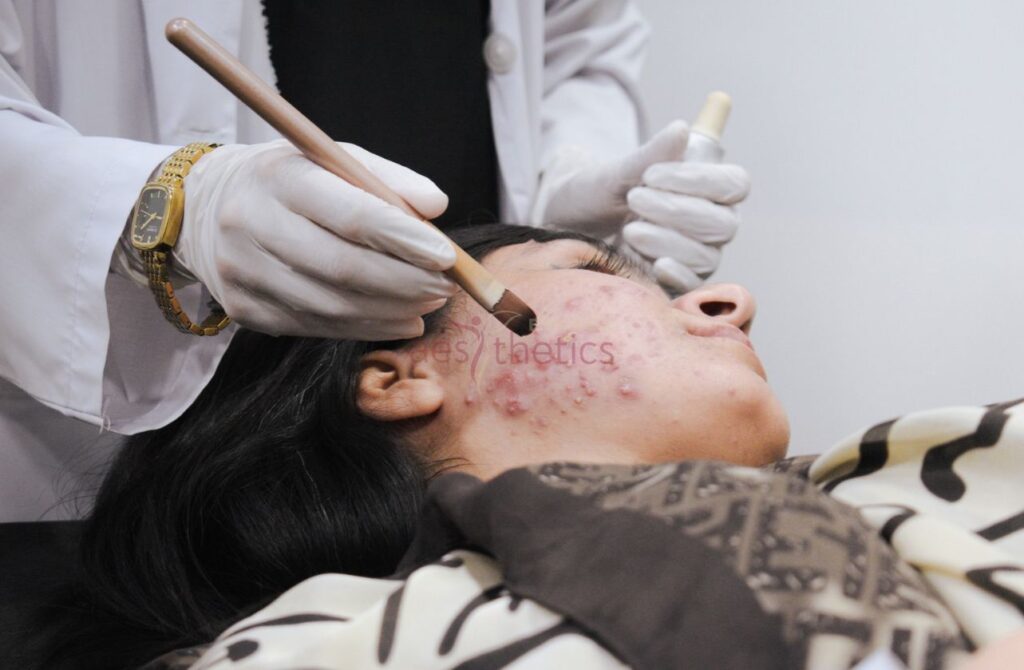
Best suited to: Oily skin, superficial acne, clogged pores, post-acne pigmentation and selected shallow textural concerns.
A chemical peel uses a controlled acidic solution to exfoliate selected layers of the skin.
BioFlex lists light, medium-depth and specialty peels. The clinic’s published options include formulations using salicylic acid, glycolic acid, lactic acid, mandelic acid and TCA-based solutions.
A selected peel may help with:
- Blackheads and clogged pores
- Oily skin
- Mild active acne
- Flat post-acne marks
- Uneven skin tone
- Rough surface texture
- Some shallow scars
Salicylic acid is often considered for oily or acne-prone skin. Glycolic, lactic or mandelic formulations may be selected for texture and pigmentation concerns. Medium-depth peels reach deeper but involve more peeling and a greater risk of irritation.
The strongest peel is not automatically the most effective choice. A peel that is too aggressive can cause inflammation, prolonged pigmentation or scarring—particularly in skin that already develops dark marks easily.
Typical recovery: Mild flaking after a light peel or several days of visible peeling after a deeper procedure.
BioFlex Aesthetic VIVA Radiofrequency Microneedling
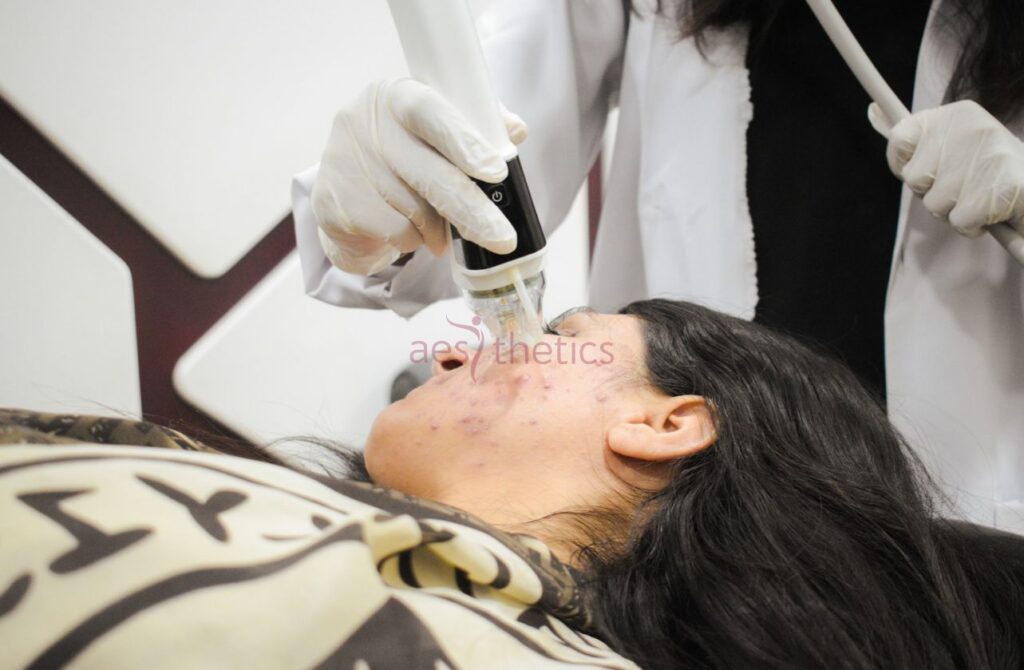
Best suited to: Rolling scars, selected boxcar scars, enlarged pores and general uneven texture.
BioFlex Aesthetic VIVA combines fine microneedles with radiofrequency energy. The needles create controlled treatment channels while RF energy is delivered at selected depths.
The clinic presents VIVA as a treatment for acne scars and uneven texture.
Radiofrequency microneedling may help by encouraging a structured healing response and new collagen formation. It may be considered for:
- Rolling scars
- Shallow or moderate boxcar scars
- Enlarged pores
- Uneven skin texture
- Mixed atrophic scarring
Evidence reviews suggest that microneedling can improve atrophic acne scars, although treatment methods and outcomes vary. More recent reviews of fractional radiofrequency microneedling also report promising results while noting the need for further high-quality trials.
RF microneedling may not fully correct deep ice-pick scars or scars that are firmly tethered beneath the skin. These limitations should be explained before a treatment course is started.
Not sure whether your scars and skin type are a good match? Read our detailed guide on RF microneedling for acne scars to understand who benefits most, what results to expect and when another treatment may be better.
Typical recovery: Redness, warmth, mild swelling, sensitivity or pinpoint crusting for several days.
Face PRP
Best suited to: Selected mild or moderate scars, enlarged pores and general skin-texture improvement, often as part of a combination plan.
Platelet-rich plasma is prepared from a small sample of the patient’s own blood. After processing, the concentrated plasma is injected or applied to selected areas.
BioFlex offers Face PRP for concerns including acne scars, enlarged pores, uneven texture and pigmentation. The clinic may apply PRP through injections or alongside microneedling.
PRP may be used to support:
- Collagen-remodelling procedures
- Recovery after microneedling
- Mild textural irregularities
- Enlarged pores
- Overall skin quality
PRP should not be presented as a guaranteed stand-alone solution for deep scars. Outcomes depend on preparation method, delivery technique, scar type and the treatment it is combined with.
Typical recovery: Temporary redness, tenderness, swelling, bruising or small injection marks.
PRP Mesotherapy
Best suited to: General skin rejuvenation and selected mild textural concerns.
PRP Mesotherapy uses fine micro-injections to deliver platelet-rich plasma into targeted skin layers. BioFlex lists it for skin renewal, texture improvement and reduced scarring.
It may be considered for:
- Mild textural irregularity
- Skin-quality improvement
- Selected acne scars
- A staged combination plan
Because the procedure involves blood collection and multiple injections, the practitioner should assess bleeding risk, medical history, current medicines and suitability before treatment.
Typical recovery: Mild redness, tenderness, pinpoint swelling or bruising for approximately one to two days.
Plasma Fusion
Best suited to: Selected cases involving uneven texture, post-acne pigmentation or acne scars after individual assessment.
BioFlex offers Plasma Fusion using controlled plasma energy. The clinic lists acne, acne scars, pigmentation and uneven texture among the concerns that may be assessed for this treatment.
Plasma-based procedures can vary in technology, depth and intensity. Patients should receive a clear explanation of:
- The exact device being used
- The type of plasma energy
- Expected recovery
- Pigment risk
- Possible crusting
- Evidence supporting its use for their concern
Plasma Fusion should not be treated as interchangeable with RF microneedling or a chemical peel. Suitability depends on scar depth, skin tone, active inflammation and the practitioner’s treatment objective.
Typical recovery: Redness, warmth, swelling and small crusted treatment points may occur.
Which Treatment May Suit Each Concern?
| Skin concern | Procedure that may be considered | What it aims to address |
| Blackheads and surface congestion | HydraFacial or a selected light peel | Cleansing and pore congestion |
| Oily, acne-prone skin | HydraFacial or salicylic-based peel | Oil, blocked pores and superficial breakouts |
| Flat brown acne marks | Selected chemical peel | Uneven pigment |
| Enlarged pores | HydraFacial, peel, VIVA or PRP | Surface appearance and collagen support |
| Rolling scars | VIVA RF microneedling | Collagen remodelling |
| Shallow boxcar scars | VIVA, selected peel or combination plan | Scar edges and surrounding texture |
| Deep ice-pick scars | Specialist assessment | Standard clinic procedures may not be enough |
| Mixed scars and pigmentation | Staged combination | Different concerns at different depths |
| Raised or keloid scars | Dermatologist-led review | Resurfacing may not be suitable |
Is Combination Treatment Better for Acne Scars?
Direct answer: Combination treatment may be useful when a patient has more than one concern, such as pigmentation, enlarged pores and indented scars. Each procedure should have a specific purpose rather than being added automatically.
A patient may have active breakouts, brown marks, rolling scars and boxcar scars on the same cheek. One procedure is unlikely to address all four concerns equally.
A staged plan might involve:
- Controlling active breakouts
- Establishing a gentle skincare routine
- Treating persistent pigmentation with a selected peel
- Using VIVA RF microneedling for depressed scars
- Adding PRP when appropriate
- Reviewing progress before scheduling further sessions
Treatments should not be combined simply to create a larger package. The timing must allow the skin to recover, and every procedure should address a clearly identified concern.
How Many Acne Scar Treatment Sessions Are Needed?
There is no fixed number that applies to every patient.
The number of sessions depends on:
- Scar depth
- Scar type
- Size of the area
- Active acne
- Skin sensitivity
- Procedure selected
- Recovery between sessions
- Previous treatment response
- Patient goals
- Budget
A patient with mild surface congestion may notice improvement after a HydraFacial or light peel. Established pitted scars usually need several treatments followed by a progress review.
BioFlex service pages commonly describe treatment courses rather than promising a one-session correction. The final number should be based on clinical response, not a preset guarantee.
How Long Does It Take to See Results?
Results develop at different speeds.
HydraFacial or Light Peel
The skin may appear cleaner, smoother or more hydrated within days. Pigmentation and acne control take longer.
Medium-Depth Peel
Visible peeling may last several days. Changes in tone and texture become clearer after the skin has healed.
RF Microneedling
Redness may settle within days, but collagen remodelling develops gradually over several weeks or months.
PRP
Early changes may be subtle. Improvement related to collagen and skin quality develops over time and may require a course of treatment.
Immediate swelling should not be confused with a final result. Reliable progress photographs should use the same lighting, camera distance, angle and facial expression.
Is Acne Scar Treatment Painful?
Comfort depends on the procedure and the patient’s sensitivity.
- HydraFacial is usually well tolerated.
- Light peels may cause tingling or warmth.
- Medium-depth peels may feel more intense.
- RF microneedling may cause pressure, heat or pinprick sensations.
- PRP involves a blood draw and injections.
- Plasma Fusion may cause warmth or tingling.
Topical numbing cream may be used for selected procedures. Pain that becomes severe or continues to worsen after treatment should be reported to the clinic.
What Is the Cost of Acne Scar Treatment in Pakistan?
Direct answer: Acne scar treatment cost in Pakistan varies according to the procedure, scar severity, treatment area and number of sessions. An accurate price should follow a skin assessment because different scar types require different plans.
At BioFlex, acne scar treatment typically starts from PKR 5,000 per session, depending on the procedure, scar severity and number of sessions required.
The total cost may depend on:
- Procedure selected
- Full-face or localised treatment
- Scar severity
- Number of sessions
- Combination treatments
- PRP preparation
- Consumables and numbing
- Follow-up appointments
- Clinic location
- Maintenance treatment
A low price is not always good value. An unsuitable procedure may waste money, delay proper care and create additional pigmentation.
Before paying for a package, ask for:
- The name of each procedure
- The purpose of each session
- Estimated number of sessions
- Expected downtime
- Possible side effects
- Total package price
- Follow-up arrangements
- What happens if the plan needs to change
BioFlex offers an initial consultation in which the patient’s concerns are assessed before a personalised plan is recommended.
What Are the Possible Side Effects?
Every procedure has potential side effects.
Depending on the treatment, these may include:
- Redness
- Swelling
- Tenderness
- Dryness
- Flaking
- Temporary acne flare
- Pinpoint bleeding
- Bruising
- Small crusted areas
- Infection
- Cold-sore reactivation
- Post-inflammatory hyperpigmentation
- Loss of pigment
- Prolonged irritation
- Scarring
Pigmentation risk deserves particular attention in Pakistani skin. Conservative settings, suitable treatment selection and proper aftercare are more valuable than choosing the strongest possible procedure.
Who May Need to Delay or Avoid Treatment?
Treatment may need to be postponed or changed for people with:
- Active skin infection
- Open wounds
- Severe uncontrolled acne
- Recent sunburn or heavy tanning
- Active eczema or dermatitis
- History of abnormal scarring
- Bleeding or clotting disorders
- Certain blood-thinning medicines
- Recent strong acne medication
- Pregnancy or breastfeeding, depending on the procedure
- Unrealistic expectations
A history of keloids should always be disclosed before microneedling, injections, peels or plasma-based treatment.
Do not stop prescription medicines without speaking to the doctor who prescribed them.
How Should You Prepare for Treatment?
Instructions vary by procedure, but preparation may include:
- Sharing your complete medical history
- Listing all medicines and supplements
- Explaining previous treatment reactions
- Avoiding strong sun exposure
- Not picking active acne
- Pausing retinoids or exfoliating acids when advised
- Arriving with clean skin
- Avoiding waxing or threading before selected procedures
- Planning treatment away from important events
- Asking how much visible recovery to expect
A professional should provide procedure-specific instructions rather than relying on one general checklist for every treatment.
What Aftercare Is Usually Required?
Aftercare protects the healing skin and may reduce irritation, infection and pigmentation.
Patients are commonly advised to:
- Use a gentle cleanser
- Apply a suitable moisturiser
- Wear broad-spectrum sunscreen
- Avoid picking or removing peeling skin
- Pause scrubs, acids and retinoids until cleared
- Avoid excessive heat and intense exercise during early recovery
- Avoid unapproved bleaching products
- Keep hands and makeup tools clean
- Follow the clinic’s written instructions
- Report worsening pain, blistering, discharge or severe swelling
The American Academy of Dermatology advises consistent sun protection after acne-scar treatment, including applying sunscreen before outdoor exposure.
How Can New Acne Scars Be Prevented?
Scar treatment has limited value if new inflammatory acne continues to form.
Treat Acne Early
Deep, painful or rapidly worsening acne should be professionally assessed. Early treatment may reduce the number of new scars.
Do Not Pick Spots
Squeezing increases inflammation and tissue damage. It may also push material deeper into the skin.
Cleanse Gently
Wash the face gently up to twice daily and after sweating. Use fingertips rather than rough brushes or scrubs. This approach is also recommended by the American Academy of Dermatology for acne-prone skin.
Use a Suitable Moisturiser
Oily skin can still become dehydrated. A non-comedogenic moisturiser may help maintain the skin barrier.
Apply Sunscreen Daily
Sun exposure may darken post-acne marks and prolong uneven pigmentation.
Give Treatment Time
Frequently changing products can irritate the skin. Acne treatment often needs several weeks before progress becomes clear.
Seek Help for Deep or Painful Acne
A dermatologist or appropriately qualified medical professional should assess nodules, cysts, rapidly forming scars or acne that is affecting emotional well-being.
Common Myths About Acne Scar Treatment
“Acne scars can be removed completely.”
Professional treatment may make scars smoother, shallower and less noticeable. Complete removal cannot be promised.
“Every dark mark is a scar.”
Flat brown or grey marks are often post-inflammatory hyperpigmentation rather than permanent scars.
“A stronger peel gives a better result.”
An overly aggressive peel may cause burns, pigmentation or scarring. Correct selection matters more than maximum strength.
“Scrubbing removes pitted scars.”
Scrubs affect only the surface. They cannot replace lost collagen and may worsen inflammation.
“Home microneedling is the same as clinical microneedling.”
Home rollers do not provide the same sterility, controlled depth or treatment planning. Incorrect use may cause infection, irritation and pigmentation.
“HydraFacial can remove deep acne scars.”
HydraFacial may support congestion, hydration and surface appearance. It does not rebuild deep scar tissue.
“One treatment works for every scar.”
Ice-pick, rolling, boxcar and raised scars behave differently. Each scar type may require a different approach.
How to Choose an Acne Scar Clinic in Pakistan
Before booking a procedure, ask:
- Who will assess my skin?
- Who will perform the procedure?
- What qualifications and training do they have?
- Do I have marks, scars or both?
- Which scar type is dominant?
- Is my active acne controlled?
- Why is this treatment being recommended?
- What improvement is realistic?
- What is the pigmentation risk for my skin tone?
- How much downtime should I expect?
- What aftercare will I receive?
- What happens if I develop a complication?
- Will my progress photographs use consistent lighting?
- Is the device maintained according to its protocol?
Be cautious when a clinic promises complete removal, recommends an expensive package without examining the skin or refuses to discuss possible side effects.
Why Consider BioFlex Aesthetics?
BioFlex Aesthetics positions its care around consultation, skin assessment, personalised planning, aftercare and follow-up. The clinic offers several acne-related procedures within the same network, allowing a plan to be selected according to the patient’s dominant concerns.
Available options include:
- HydraFacial
- Chemical peels
- BioFlex Aesthetic VIVA
- Face PRP
- PRP Mesotherapy
- Plasma Fusion
BioFlex has five listed clinic locations:
- Islamabad, Golra Mor
- Islamabad, F-8
- Rawalpindi, Bahria Town
- Karachi
- Peshawar
The right starting point is a professional assessment rather than choosing a procedure based only on an advertisement, social-media video or someone else’s results.
Frequently Asked Questions
What is the most effective treatment for acne scars in Pakistan?
There is no single most effective procedure for every patient. RF microneedling may help selected rolling and boxcar scars, chemical peels may help pigmentation and shallow surface concerns, and PRP may be used as part of a combination plan. The choice depends on scar type, skin tone and active acne.
Should active acne be treated before acne scars?
Active acne should usually be brought under control before intensive scar treatment. Otherwise, new breakouts may continue producing scars while older scars are being treated.
Can acne scars disappear naturally?
Flat post-acne marks may fade gradually. True indented or raised scars usually do not disappear completely without professional treatment.
Can chemical peels remove acne scars?
Chemical peels may improve acne marks, rough texture and selected shallow scars. They are less likely to correct deep ice-pick, tethered rolling or deep boxcar scars when used alone.
Is microneedling suitable for Pakistani skin?
Microneedling can be performed on different skin tones when treatment depth, energy, hygiene and aftercare are properly controlled. Patients with active infection, uncontrolled acne or a history of abnormal scars may need another approach.
Is PRP effective for acne scars?
PRP may support healing and collagen remodelling, particularly when combined with microneedling. It should not be presented as a guaranteed treatment for every scar.
Can HydraFacial treat acne?
HydraFacial may help clogged pores, blackheads, surface oil and mild breakouts. Deep, cystic or rapidly scarring acne requires medical assessment.
Does HydraFacial remove acne scars?
No. HydraFacial can improve congestion, hydration and surface appearance, but it does not rebuild deep scar tissue.
How many sessions are needed for pitted acne scars?
Pitted scars commonly need a course of treatments. The number depends on scar type, depth, procedure and response. Progress should be reviewed between sessions.
How long is the downtime after acne scar treatment?
Downtime varies. HydraFacial may cause little visible recovery, while chemical peels, RF microneedling and Plasma Fusion may involve redness, flaking, swelling or crusting for several days.
Can men receive acne scar treatment?
Yes. Acne and acne scars affect all genders. Treatment is based on skin condition and scar type rather than gender.
Can acne scars return after treatment?
A treated scar does not turn back into acne. New scars can form if new inflammatory breakouts are not controlled.
Is acne scar treatment safe during pregnancy?
Some treatments, medicines and skincare ingredients may not be suitable during pregnancy or breastfeeding. Inform the practitioner before booking any procedure.
Can acne scar treatment cause darker skin?
Temporary or prolonged hyperpigmentation is possible, especially after inflammation or an aggressive procedure. Careful treatment selection and sun protection may reduce the risk.
When should I see a dermatologist?
Seek medical assessment when acne is deep, painful, widespread, leaving scars, not responding to routine care or affecting your confidence. NICE guidance also supports specialist involvement for persistent or significant acne-related scarring.
Book an Acne and Acne Scar Consultation
Clearer-looking skin begins with identifying the problem correctly.

A BioFlex Aesthetics consultation can assess:
- Active acne
- Blackheads and congestion
- Post-inflammatory hyperpigmentation
- Enlarged pores
- Ice-pick scars
- Rolling scars
- Boxcar scars
- Raised scars
- Skin sensitivity
- Previous procedure response
- Suitability for available treatments
Following assessment, the team can explain whether HydraFacial, a chemical peel, VIVA RF microneedling, Face PRP, PRP Mesotherapy, Plasma Fusion or a staged combination may be suitable.
Call: +92 323 2463539
Email: info@bioflexaesthetics.com
Locations: Islamabad, Rawalpindi, Karachi and Peshawar
Book a consultation to receive an acne and acne-scar treatment plan based on your skin, scar pattern and recovery needs.
