
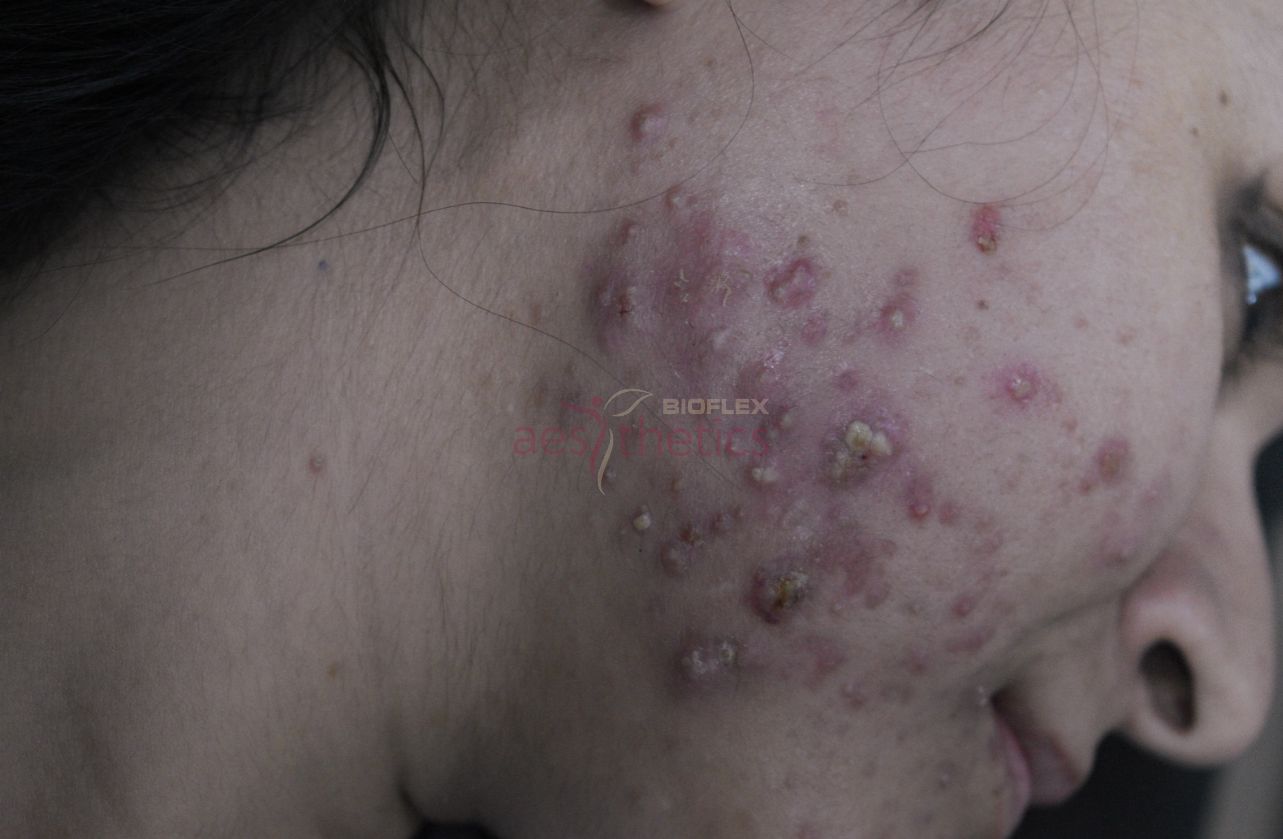
Direct answer: Acne marks are flat patches of discolouration (brown, grey, red or purple) left after a breakout heals. Acne scars change the skin’s actual texture, appearing indented or raised, because the inflammation reached the deeper skin layer. Marks are usually flat and fade with time. Scars are structural and usually need a professional procedure to improve.
Most people call any post-breakout mark a “scar,” but clinically that’s not quite right, and it matters for treatment. A flat brown mark and a pitted scar don’t respond to the same skincare, and they don’t respond to the same procedure either. Knowing which one you actually have is the first real step toward treating it. Once you know whether you are dealing with marks, scars, or both, our complete guide to acne scar treatment in Pakistan explains the available treatment options, assessment process, costs, recovery, and what you can realistically expect.
Acne Marks: Flat, Temporary, Pigment-Based
Acne marks are a colour change, nothing more. There’s no shift in texture: run a finger over the spot with your eyes closed and you won’t feel a bump or a dip.
- Post-Inflammatory Hyperpigmentation (PIH): flat brown, dark brown, grey or black marks caused by extra pigment production after inflammation. These are more visible and more stubborn in medium and deeper skin tones, which describes most skin tones across Pakistan.
- Post-Inflammatory Redness: flat pink, red or purple marks caused by changes in small blood vessels rather than pigment or tissue loss.
Both types are usually temporary. They can fade over weeks to months, faster still with consistent sun protection.
Acne Scars: Structural, Often Permanent Without Treatment
A true acne scar changes the physical structure of the skin. It can be:
- Indented (atrophic): ice-pick, boxcar, and rolling scars, depending on shape and depth
- Raised: thickened scar tissue from excess collagen during healing
The American Academy of Dermatology draws the same line: flat post-inflammatory marks are separate from true structural scars, and figuring out which one you have should come before choosing a treatment.
Quick Comparison
| Acne Mark | Acne Scar | |
| Surface | Flat | Indented or raised |
| Main cause | Pigment or blood vessel change | Collagen/tissue structure change |
| Colour | Brown, grey, red or purple | Often skin-toned, sometimes discoloured |
| Fades on its own? | Often, over weeks to months | Rarely without a procedure |
| Skincare alone helps? | Sometimes | Limited effect once texture has changed |
How to Check Which One You Have
Two quick checks can help before you book anything:
- The touch test. Close your eyes and run a fingertip over the area. A dip, pit, or raised bump means it’s a scar. Completely smooth means it’s a mark.
- The angled-light test. Look at the spot under bright light from the side. A scar casts a small shadow because of its texture; a flat mark looks the same from any angle.
Most people have a mix of both: some flat pigmentation and a few textural scars. That’s why a professional assessment beats guessing at home.
Why This Matters More for Pakistani Skin
Medium-to-deep skin tones, common across Islamabad, Rawalpindi, Karachi, and Peshawar, are more prone to post-inflammatory hyperpigmentation, and that pigmentation tends to fade more slowly. Two things follow from that:
- An aggressive scar procedure used on skin that’s actually just pigmented can trigger more hyperpigmentation instead of clearing it up.
- Skipping daily sunscreen lets existing marks sit there and darken for longer than they need to.
That’s why BioFlex Aesthetics starts every case with a skin assessment before recommending a specific procedure, instead of treating marks and scars the same way.
Treating Acne Marks at BioFlex
Marks are a pigment and surface-renewal concern, so treatment focuses on evening out skin tone and gentle exfoliation:
- Chemical Peels: controlled exfoliation that lifts pigmented surface cells and encourages more even skin turnover. Commonly used for post-acne pigmentation.
- HydraFacial: cleansing, extraction and hydration that supports overall skin clarity, often paired with a peel for congested or acne-prone skin.
Treating Acne Scars at BioFlex
Scars involve real tissue change, so treatment focuses on collagen support and texture remodelling:
- Face PRP: platelet-rich plasma used to support mild-to-moderate textural concerns, enlarged pores, and recovery after collagen-remodelling procedures.
- PRP Mesotherapy: fine injections of PRP for general skin quality and selected mild scarring.
- Plasma Fusion: ionised plasma energy assessed for selected acne scars, uneven texture and pigmentation.
A practitioner may also recommend combining approaches depending on your scar pattern. That call gets made during consultation, not before.
Frequently Asked Questions
Can an acne mark turn into a scar?
Not directly. But picking or squeezing active breakouts raises the risk of the deeper inflammation that leads to true scarring.
Do acne marks disappear completely without treatment?
Many fade noticeably over weeks to months, especially with daily sunscreen. Deeper pigmentation, more common in medium-to-deep skin tones, often needs a professional peel or facial to clear fully.
Can I have marks and scars at the same time?
Yes, and it’s common. A combined plan, such as a chemical peel for pigmentation alongside a collagen-focused procedure for texture, is often appropriate, and it gets assessed during consultation.
Is it safe to treat pigmented, darker skin tones with these procedures?
Yes, when a trained practitioner uses the right settings. That’s exactly why BioFlex begins with an in-person assessment rather than a generic package: the wrong intensity on deeper skin tones can make pigmentation worse.
Not Sure Which One You Have?
Book a free consultation at BioFlex Aesthetics in Islamabad, Rawalpindi, Karachi, or Peshawar for an in-person assessment of whether you’re dealing with acne marks, true scars, or both, and a treatment plan built around your skin.
Written by: BioFlex Aesthetics Editorial Team
Reviewed by: Dr. Maria Ahmed
Credentials: MBBS, Dermatologist/Aesthetic Physician
PMDC Registration: 625405
Last Medically Reviewed: August 2026
Last Updated: August 2026
