
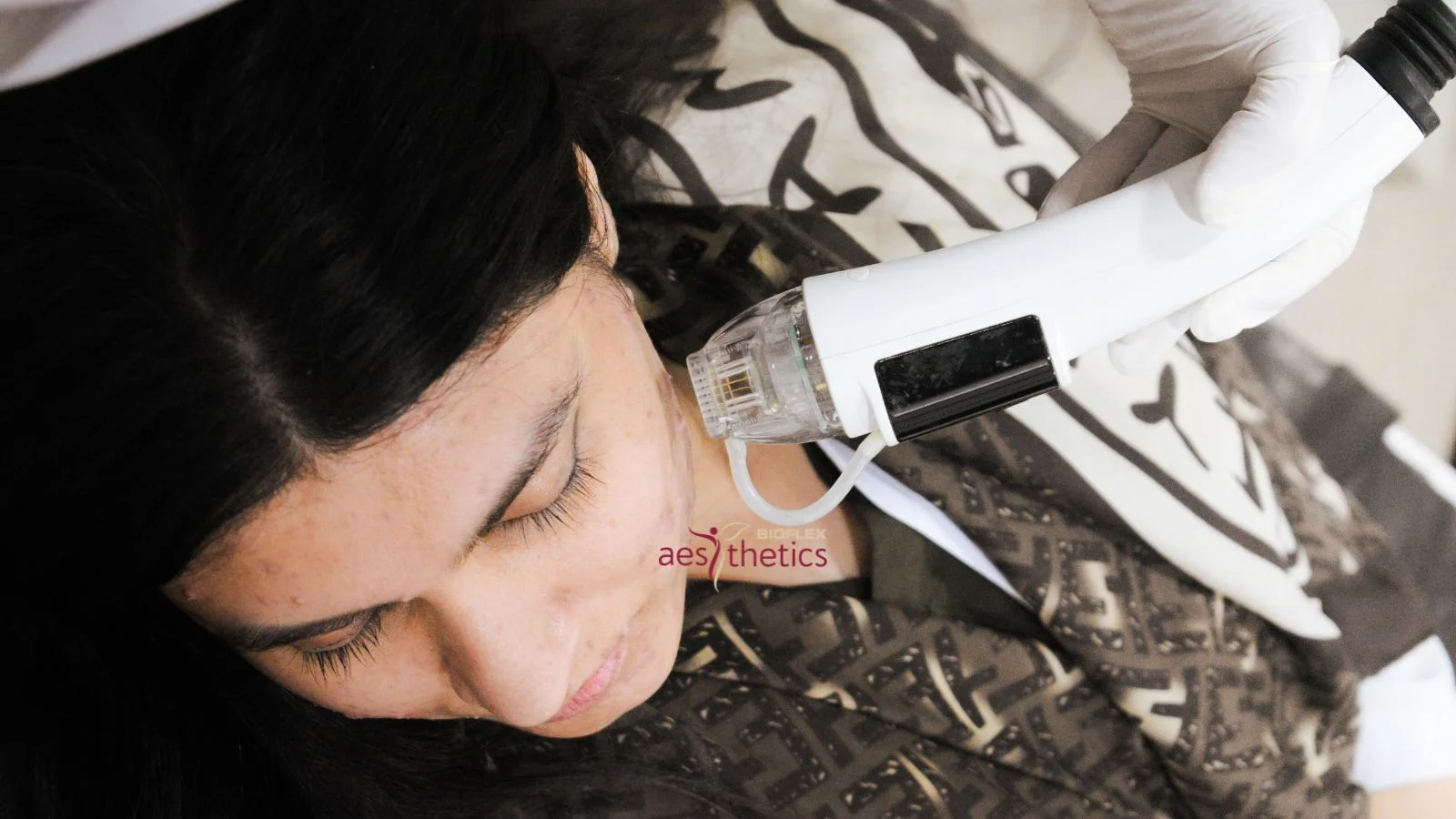
RF microneedling comes up constantly once someone starts researching acne scar treatment, usually right alongside chemical peels, PRP, and subcision. The honest answer to “which one should I get” is that it depends on your scar type, and RF microneedling is not the automatic best choice for everyone.
This guide focuses on the decision itself: which scars respond well to RF microneedling, which ones respond better to something else, and what a realistic treatment course looks like at BioFlex Aesthetics.
Which acne scars respond well to RF microneedling
RF microneedling works by combining fine needles with radiofrequency energy, reaching deeper into the skin than a peel or standard microneedling alone. That depth is what makes it particularly effective for scars that involve a textural change to the skin, not just discoloration.
It tends to work best for:
- Rolling scars, where the skin has a wave-like, uneven surface
- Boxcar scars, with their defined edges and shallow-to-moderate depth
- General textural roughness and enlarged pores left behind by acne
A randomized trial comparing the two treatments directly in Fitzpatrick IV to VI skin found that microneedling improved atrophic acne scars in about 73% of patients, compared to roughly 33% for a glycolic acid peel. That gap is a big part of why RF microneedling gets recommended so often for textural scarring specifically.
When a different treatment makes more sense
RF microneedling isn’t the right starting point for every kind of scarring or skin condition.
If breakouts are still active, RF microneedling isn’t the treatment to reach for yet. Passing a device over inflamed skin risks spreading that inflammation and can leave pigmentation that lasts longer than the acne itself. A chemical peel, or simply waiting until the acne is under control, comes first.
If your scars are mostly flat, dark or red marks rather than pitting, a chemical peel or PRP is often a better fit, since RF microneedling is built to remodel texture rather than lighten pigment.
Deep, tethered rolling scars, or true icepick scars, sometimes need subcision first, a procedure that releases the scar tissue pulling the skin down, before RF microneedling or another resurfacing treatment can do its job properly.
And most people don’t have just one scar type to begin with. A combination plan, subcision plus RF microneedling, or RF microneedling plus PRP, is common and often outperforms any single treatment used alone.
The only way to know which category your scars fall into is a proper skin assessment. This is genuinely one of those situations where a photo or a Google search isn’t a substitute for a practitioner looking at your skin directly.
What a treatment course actually looks like
Most people need three to four RF microneedling sessions, spaced four to six weeks apart, before judging the final result. Downtime is mild, typically a day or two of redness, which is one of the reasons it gets chosen over more aggressive laser resurfacing for people who can’t take a week off from being seen in public.
Cost varies by clinic and by how many sessions your scars need. At BioFlex, currently RF microneedling starts from PKR 18,000 per session, and our acne scar treatment cost guide breaks down how that compares to chemical peels, PRP, and combination protocols.
Is RF microneedling safe for Pakistani skin?
This is worth addressing directly, since it’s one of the more common hesitations. Most patients across BioFlex’s clinics fall in the Fitzpatrick III to V range, and darker skin carries a higher risk of post-inflammatory hyperpigmentation with more aggressive, light-based treatments.
RF microneedling works differently. Because the energy is delivered beneath the skin’s surface rather than relying on light absorbed by pigment, research specific to skin of color has found a comparatively low rate of hyperpigmentation, along with meaningful improvement in acne scarring and existing pigmentation over a course of treatments. That combination, real efficacy with a lower pigmentation risk, is a big part of why it’s become a standard recommendation for South Asian and other melanin-rich skin types specifically.
Frequently asked questions
Is RF microneedling better than a chemical peel for acne scars?
It depends on the scar. RF microneedling generally works better for textural scarring like rolling and boxcar scars, while chemical peels tend to do more for surface discoloration and mild texture concerns.
Can I combine RF microneedling with other treatments?
Yes. Combining it with PRP or with subcision for deeper, tethered scars is common and often gives better results than either treatment alone.
How soon will I see results?
Some improvement is visible within a few weeks of the first session, but full results build over the entire course, usually three to four sessions.
Is RF microneedling painful?
Most people describe mild discomfort rather than pain. A numbing cream is applied before treatment to keep sessions comfortable.
What if my acne is still active?
RF microneedling should wait until active breakouts are under control. Treating inflamed skin raises the risk of a worse outcome.
Ready to find out which treatment fits your scars?
A consultation is the only reliable way to know whether RF microneedling, a chemical peel, PRP, or a combination is right for your skin. Book a free assessment at BioFlex Aesthetics in Islamabad, Karachi, Peshawar, or Rawalpindi.
Medical Reviewer
Written by: BioFlex Aesthetics Editorial Team
Reviewed by: Dr Aneeqa Fayyaz
Credentials: MBBS, Dermatologist/Aesthetic Physician
PMDC Registration: 83250
Last Medically Reviewed: October 2026
Last Updated: October 2026
