
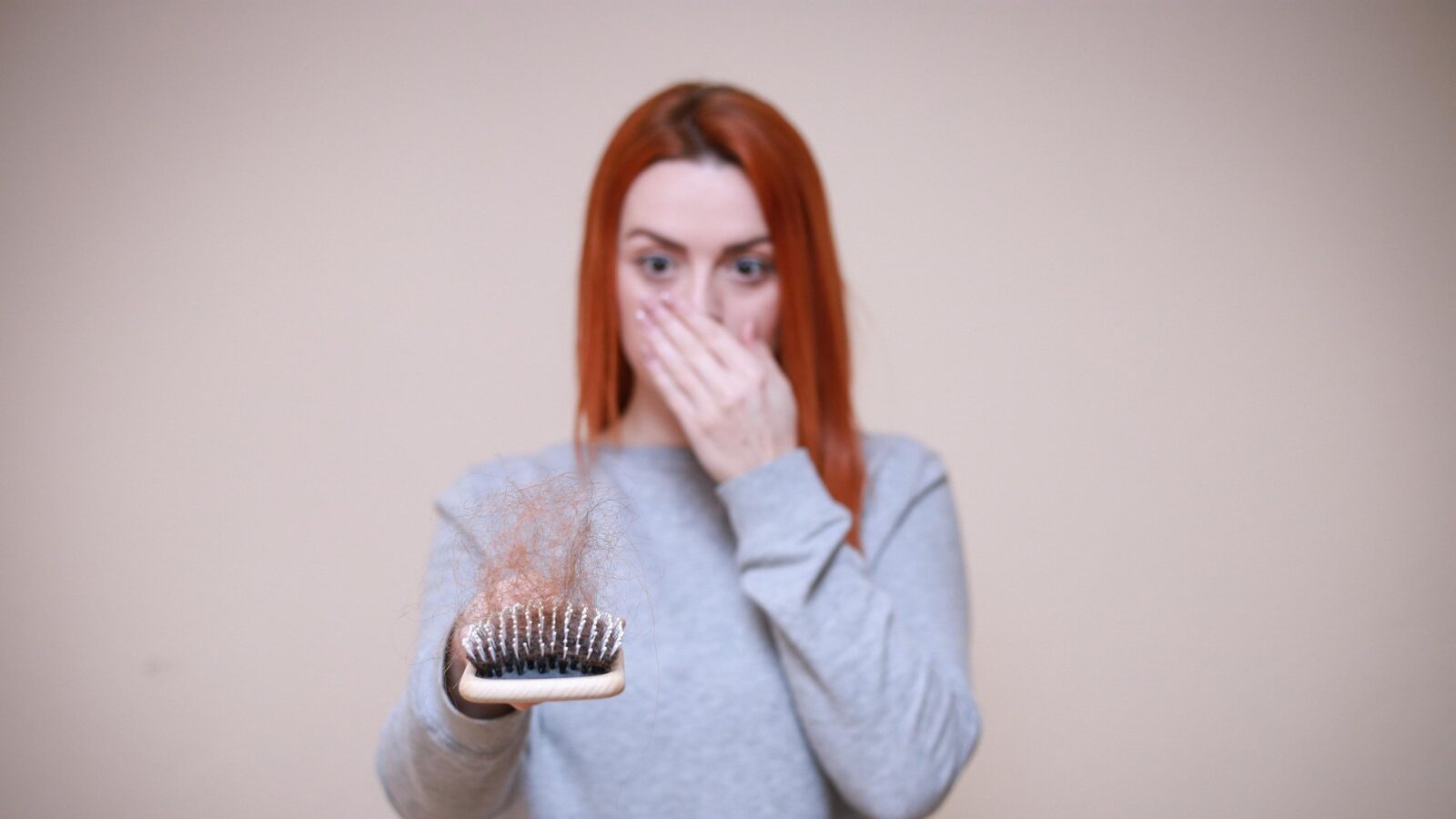
Everyone sheds hair. The question is how much, and why it suddenly feels like more than usual. This guide walks through what actually causes excess hair fall, which home habits genuinely help versus which ones just feel productive, and when it’s time to stop guessing and get a scalp evaluated.
How much hair loss is actually normal?
Losing hair every day is not a sign anything is wrong. The American Academy of Dermatology puts normal daily shedding at 50 to 100 hairs, out of roughly 100,000 hairs on the scalp. The reason it can look alarming on a pillow or in a shower drain is simple: hair that falls out over 24 hours collects in a few visible spots instead of spreading out.
Shedding becomes a medical concern (a condition called telogen effluvium) when it goes well beyond that range, often triggered by a stressor three to four months earlier: illness, a crash diet, childbirth, or a period of high stress. If that sounds like your situation and the shedding has lasted more than a few months, that’s a signal to get it looked at rather than wait it out.
What causes hair fall?
A few overlapping causes account for most cases.
Genetics. Androgenetic alopecia, hereditary pattern hair loss, is the most common cause in both men and women. It’s gradual and progressive rather than sudden.
Hormones. Thyroid disorders, PCOS, pregnancy, and menopause can all disrupt the hair growth cycle. Hormonal hair loss often has a different pattern than genetic hair loss, which is one reason a proper diagnosis matters more than guessing from symptoms alone.
Nutrition. Low iron, vitamin D, zinc, or biotin can weaken hair structure. This is usually confirmed with blood work, not assumed.
Stress and illness. This is the telogen effluvium pattern described above: a delayed, diffuse shedding response to a physical or emotional shock.
Hair care habits. Heat styling, chemical treatments, and tight hairstyles cause breakage, which can look like hair loss but is a different problem with a different fix.
Does home care actually help?
Some of it, within limits. A gentle scalp massage with a light oil can improve comfort and circulation, and reducing heat styling and tight hairstyles genuinely reduces breakage. These help most with mild, temporary shedding, especially the styling-related kind.
What home care can’t do is reverse hormonal or genetic hair loss, or replace an actual diagnosis. If shedding has lasted more than three months, home remedies are worth continuing alongside a proper evaluation, not instead of one.
When to see a professional
- Sudden or patchy hair loss, rather than gradual thinning
- Shedding that’s lasted more than three months
- Itching, redness, or scalp inflammation alongside the hair loss
- Noticeable thinning at the crown or hairline
A dermatologist or trichologist can run a scalp analysis and, where relevant, blood work to identify the actual cause before recommending treatment. This step matters because genetic, hormonal, and stress-related hair loss respond to different things, and treating the wrong cause wastes time.
What dermatology generally offers for hair loss
Depending on the diagnosis, a dermatologist might discuss topical or oral medications that affect the hair growth cycle, PRP therapy, or, for advanced cases, surgical hair restoration. These aren’t equally suited to every cause, which is exactly why the diagnosis step comes first.
(Note: only mention PRP here as a lead-in to the next section. Do not list medication brand names or hair transplant procedure details, since these aren’t Bioflex services.)
Hair fall treatment at Bioflex Aesthetics
At our clinics in Islamabad, Rawalpindi, Karachi, and Peshawar, we start with a scalp assessment to understand what’s actually driving the shedding before recommending anything. For hair loss linked to active follicles, genetic thinning, or stress-related shedding, PRP hair treatment is our primary in-clinic option: it uses your own blood plasma to support follicle activity, and has real clinical research behind it. Read what the research says about PRP for hair loss or see our PRP Hair Treatment service page for details.
Book a free scalp consultation at your nearest clinic to find out what’s actually causing your hair fall.
Is it normal to see a lot of hair when I wash it?
Usually, yes. Hair that would have shed gradually throughout the day often comes out in one batch during washing, so it can look like more than it is. The 50 to 100 hairs a day figure includes this.
Will hair grow back after stress-related shedding?
In most cases, yes, once the underlying trigger resolves. Stress-related shedding (telogen effluvium) is usually temporary, though it can take several months for regrowth to become visible since hair sheds on a delay of about three months after the trigger.
How long does hair fall treatment take to show results?
This depends on the cause and treatment. For PRP specifically, most patients notice reduced shedding around two to three months in, with fuller results after completing a full course of sessions.
Do I need blood tests before starting treatment?
Often, yes, especially if a nutritional or hormonal cause is suspected. Treating hair fall without knowing the cause is a common reason treatments don’t work as expected.
Can hair fall be genetic even if it started suddenly?
Genetic hair loss is usually gradual, so a sudden change points more toward a triggered cause (stress, illness, hormonal shift) than genetics alone, though both can be present at once. A scalp assessment can tell the difference.
Sources
- American Academy of Dermatology, “Do you have hair loss or hair shedding?” aad.org
- StatPearls (NIH), “Telogen Effluvium.” ncbi.nlm.nih.gov
This article is for general information and doesn’t replace a medical consultation. Book a free consultation to find out what’s causing your hair fall.
Written by: BioFlex Aesthetics Editorial Team
Reviewed by: Dr. Hifza
Credentials: MBBS, Dermatologist/Aesthetic Physician
PMDC Registration: 25710
Last Medically Reviewed: August 2026
Last Updated: August 2026
