
Written by: BioFlex Aesthetics Editorial Team
Reviewed by: Dr Aneeqa Fayyaz
Credentials: MBBS, Dermatologist/Aesthetic Physician
PMDC Registration: 83250
Medically Reviewed: October 2026
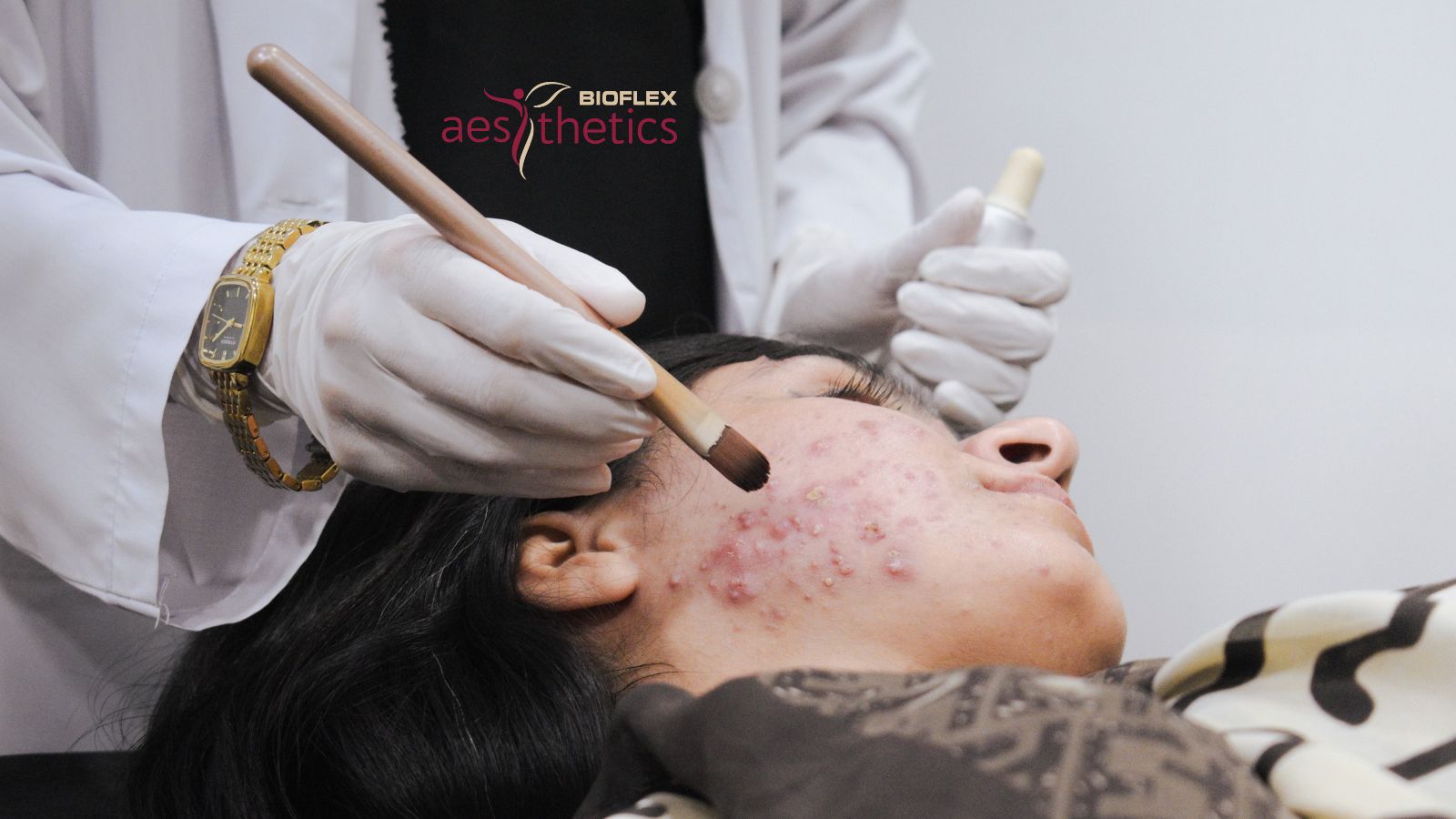
A chemical peel is usually the first treatment people ask about for acne scars, partly because it sounds gentler than a needle-based procedure and partly because it’s genuinely effective for a lot of post-acne skin concerns. It’s just not the right tool for every kind of scarring, and knowing the difference before you book saves you a wasted session.
This guide covers what chemical peels actually fix, which peel depth makes sense for Pakistani and South Asian skin specifically, and when a different treatment is the better call.
Which acne scars respond well to a chemical peel
Chemical peels work by controlled exfoliation, removing the outer layer of skin (and, with a deeper peel, some of the layer beneath it) to encourage fresh, more even skin to take its place. That mechanism makes peels especially good at fixing color and surface texture rather than deep structural damage.
They tend to work best for:
- Post-inflammatory hyperpigmentation, the dark or red marks acne leaves behind
- Dullness and uneven skin tone from past breakouts
- Mild surface roughness and enlarged pores
- Active acne itself, since peels help unclog pores and calm inflammation alongside treating scarring
A clinical trial combining a modified Jessner’s peel with TCA on acne-prone skin brought inflammatory lesion counts down from an average of 27.2 to 7.6, a meaningfully bigger drop than a single peel used alone (26.8 to 13.4). That’s a useful data point if your skin still has some active breakouts alongside old scarring, since a peel can address both at once.
Where a peel falls short
Chemical peels are surface and mid-layer treatments. They don’t reach deep enough to fully resolve scars that have created a real dent or pit in the skin.
Icepick and deep boxcar scars usually need a treatment that works further into the dermis, such as RF microneedling or subcision, to see real improvement. A peel alone tends to soften the surrounding skin tone without meaningfully changing the depth of the scar itself. Our guide to RF microneedling for acne scars explains how it reaches these deeper scars and who it suits.
Rolling and heavily textured scars run into the same limit. A randomized trial comparing standard microneedling to a 35% glycolic acid peel in Fitzpatrick IV to VI skin found microneedling improved atrophic scarring in about 73% of patients, compared to roughly 33% for the peel. For textural scarring specifically, a peel is often the weaker option of the two.
If your scars are more about color and surface unevenness than genuine indentation, a peel is a strong choice. If a fingertip run across your skin catches on a dip or ridge, that’s usually a sign you need something that reaches deeper.
Which peel depth is safe for Pakistani skin
This matters more for acne scarring than most people realize, because peel depth and skin tone interact directly.
Superficial peels, using glycolic, salicylic, lactic, or mandelic acid, work on the outermost skin layer. They’re the safest option for melanin-rich skin, including most Pakistani and South Asian skin tones, and they’re well suited to discoloration, active acne, and mild texture.
Medium-depth peels go further into the skin and can meaningfully help moderate atrophic scarring. They’re often TCA-based, sometimes paired with a Jessner’s solution, and they carry more risk of post-inflammatory hyperpigmentation in darker skin, so they need to be handled carefully, with the right concentration and proper aftercare, ideally by a provider who treats South Asian skin regularly.
Deep peels sit at the other end of that scale. They carry the highest complication risk for melanin-rich skin and are rarely the right choice outside of severe cases under close medical supervision.
In short, the deeper the peel, the more precision it takes to use safely on Pakistani skin. This is exactly the kind of decision that should happen in person, with a practitioner assessing your actual skin, not from a blog post or a price list.
What a treatment course looks like
Most people need a course of sessions rather than one visit, since peels build improvement gradually. Downtime depends heavily on depth: a superficial peel might mean a day of mild flaking, while a medium peel can mean several days of visible peeling.
At BioFlex, a chemical peel starts from PKR 5,000 per session, and our acne scar treatment cost guide breaks down how that compares to RF microneedling, PRP, and combination protocols.
Frequently asked questions
Do chemical peels work on acne scars, or just acne marks?
They work well on marks and discoloration and can help mild texture, but they’re not the strongest option for deep, pitted scarring. For that, RF microneedling or subcision usually does more.
Are chemical peels safe for darker skin tones?
Superficial peels are generally safe for Pakistani and South Asian skin. Medium and deep peels carry more risk of pigmentation changes and need to be handled by an experienced provider.
How many sessions will I need?
Most people need four to six sessions, spaced a few weeks apart, to see meaningful improvement.
Can I get a chemical peel while I still have active acne?
Often, yes. Peels can help calm active breakouts at the same time as treating existing marks, which is one of their advantages over more aggressive resurfacing treatments.
What if my scars are pitted or indented, not just discolored?
A peel alone likely won’t resolve true indentation. RF microneedling, subcision, or a combination approach tends to work better for that kind of scarring.
Ready to find out which treatment fits your skin?
A consultation is the only reliable way to know which peel depth, or which treatment altogether, is right for your scars. Book an assessment at BioFlex Aesthetics in Islamabad, Karachi, Peshawar, or Rawalpindi.
