
Most laser hair removal content online is written for lighter skin tones and doesn’t say much about how the treatment works for the skin and hair combination most common in Pakistan: darker skin with thick, dark hair. That combination actually matters, and in some ways it works in your favor.
Here’s how laser hair removal works, what makes it safe (or risky) for brown and dark skin specifically, and what to expect if you’re considering it at a clinic in Islamabad, Rawalpindi, Karachi, or Peshawar.
How Laser Hair Removal Works
The laser targets melanin, the pigment in hair, and converts light into heat that damages the hair follicle at its root. Over a series of sessions, this slows regrowth and thins the hair that does come back, until most treated areas stop producing visible hair.
Because the laser is drawn to pigment, hair color matters more than skin tone for how well the treatment works. Dark, coarse hair — which is the norm for most Pakistani patients — actually responds very well to laser treatment. The challenge with darker skin isn’t effectiveness; it’s making sure the laser can tell the difference between the hair and the surrounding skin, so the energy targets the follicle and not the skin itself.
Why Skin Tone Changes the Approach
This is the part most generic articles skip. Shorter-wavelength lasers, which work well on fair skin, carry a higher risk of burns and pigment changes (both lightening and darkening of the skin) when used on Fitzpatrick skin types IV to VI — the range most South Asian patients fall into. Longer-wavelength lasers, such as Nd:YAG systems, penetrate deeper and are absorbed less by the surface pigment in the skin, which lowers that risk considerably. Clinical studies on darker-skinned patients have found this approach effective and safe when settings are properly calibrated to skin type.
The practical takeaway: laser hair removal is not one-size-fits-all, and the right approach for a Fitzpatrick V patient in Karachi is not the same as the settings used on a fair-skinned client abroad. If a clinic isn’t asking about your skin type and adjusting settings accordingly, that’s worth questioning before you book.
What to Expect Before, During, and After
Before your session: Shave the treatment area about 24 hours beforehand, and avoid sun exposure, waxing, or chemical peels for two weeks prior. Your provider should ask about your skin type, hair color, and any medications that increase sun sensitivity.
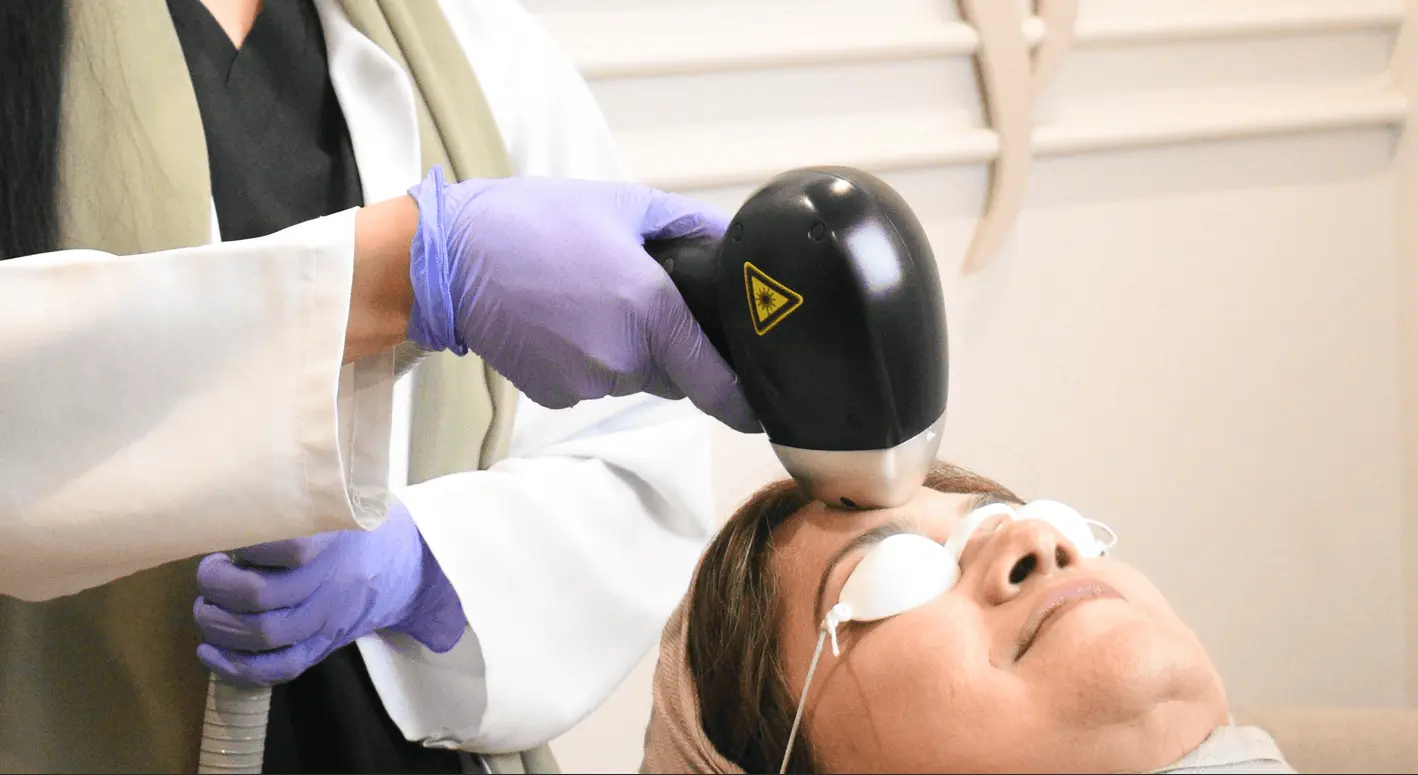
During the session: The area is cleaned, protective eyewear is provided, and the laser is passed over the skin in quick pulses. A cooling mechanism helps limit discomfort as the laser fires.
After the session: Mild redness or a sunburn-like sensation is normal and usually settles within a few hours. Aloe vera, avoiding heat and direct sun, and daily sunscreen are the main aftercare steps, and they matter more here than in cooler climates given how much sun exposure is part of daily life in Pakistan.
How Many Sessions Does It Actually Take?
Hair grows in cycles, and laser only affects follicles that are in an active growth phase at the time of treatment, which is why a single session never gets everything. Most patients need a series of 6 to 8 sessions spaced 4 to 6 weeks apart to see substantial, lasting reduction. You’ll typically notice hair growing back finer and sparser after the first two or three sessions, with the fullest results after completing the series.
Which Areas Can Be Treated
- Face: upper lip, chin, cheeks, jawline, sideburns
- Body: underarms, arms, legs, chest, back, bikini line
- More sensitive areas: Brazilian, inner thighs, lower abdomen
Laser hair removal works for men and women alike; a fair number of male patients come in specifically for chest, back, and beard-line shaping.
Is It Right for You?
If you have dark or coarse hair, you’re likely a strong candidate regardless of your skin tone, provided the clinic uses equipment suited to your skin type and staff trained in adjusting settings accordingly. It’s a poor fit for very light, blonde, grey, or red hair, since the laser has little pigment to target in those cases.
Book a Consultation
The best way to know your realistic session count and cost is a proper skin and hair assessment in person rather than a generic estimate online. Book a free consultation or explore our laser hair removal service page for pricing and package details at your nearest Bioflex Aesthetics clinic in Islamabad, Rawalpindi, Karachi, or Peshawar.
Is laser hair removal safe for dark or brown skin?
Yes, when the clinic uses equipment and settings appropriate for your skin type. Longer-wavelength lasers are generally better suited to darker skin tones and carry a lower risk of pigment changes than lasers designed for lighter skin.
How many sessions of laser hair removal are needed?
Most patients need 6 to 8 sessions spaced 4 to 6 weeks apart, since laser only affects hair follicles that are actively growing at the time of treatment.
Is laser hair removal permanent?
It produces long-term hair reduction rather than permanent removal for most patients. Hair that does regrow is typically finer and lighter, and occasional maintenance sessions can help sustain results.
Does laser hair removal hurt?
Most patients describe it as a quick snapping sensation, similar to a mild sunburn, and cooling technology during treatment reduces discomfort significantly.
Can men get laser hair removal?
Yes. Common areas for male patients include the chest, back, shoulders, and beard-line shaping.
Written by: BioFlex Aesthetics Editorial Team
Reviewed by: Dr. Hifza
Credentials: MBBS, Dermatologist/Aesthetic Physician
PMDC Registration: 25710
Last Medically Reviewed: August 2026
Last Updated: August 2026
