
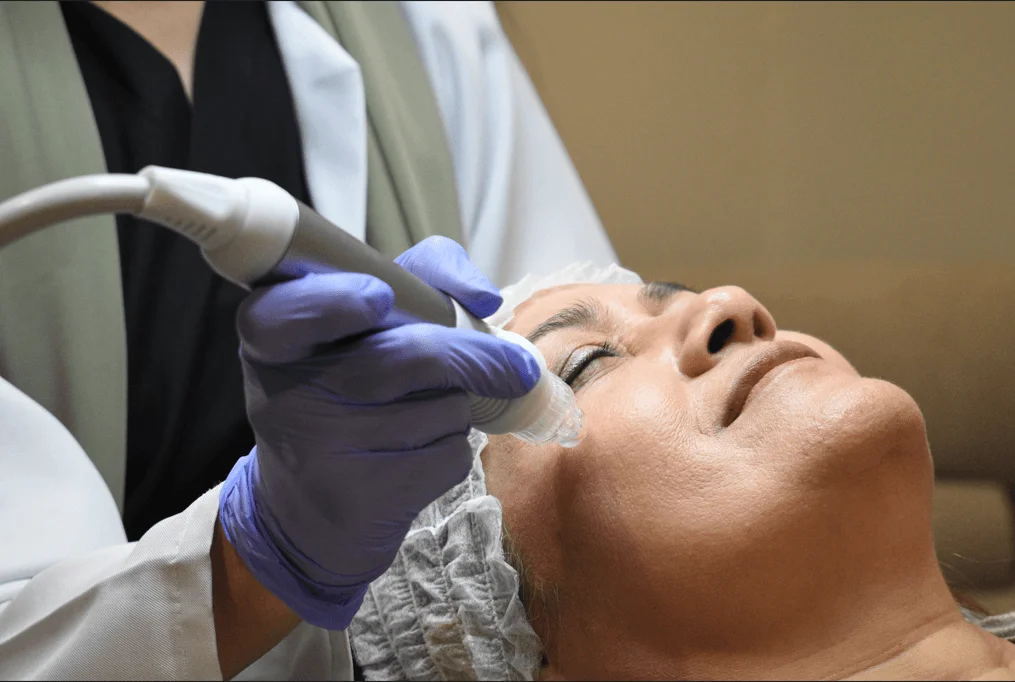
HydraFacial gets recommended for almost everything, dullness, dehydration, fine lines, congestion, and acne is usually somewhere on that list too. That’s true, but it’s also a little too broad to be useful on its own. HydraFacial works well for some kinds of acne and isn’t the right tool for others, and knowing the difference matters before you book a series of sessions expecting results it can’t deliver.
Where HydraFacial genuinely helps
HydraFacial is built around gentle exfoliation and vacuum-based extraction rather than aggressive treatment, which makes it a good fit for comedonal acne (blackheads and whiteheads), mild to moderate breakouts, and generally congested, oily skin. The extraction step clears out clogged pores without the manual pressure a facialist’s hands would apply, which matters for reducing the marks that can follow a rough extraction.
It’s also a strong maintenance option. If you’ve already treated deeper scarring with RF microneedling or cleared active breakouts with a chemical peel, HydraFacial is a reasonable way to keep pores clear and prevent new congestion between more intensive treatments, rather than starting the deeper work over from scratch.
What the research shows
A 2022 peer-reviewed study in the Journal of Clinical and Aesthetic Dermatology tracked 20 adults with mild-to-moderate acne through six HydraFacial Clarifying Treatments over 12 weeks, one session every two weeks. By the final treatment, the share of patients rated as clear or almost clear on a standard acne severity scale rose from 20% to 65% by the investigator’s assessment, and from 5% to 55% by the patients’ own reporting. Both changes were statistically significant, and side effects were limited to mild, temporary redness or stinging.
That’s a meaningfully more specific result than the general “instant glow” claims HydraFacial is often marketed with, and it’s worth knowing the study specifically enrolled people with mild-to-moderate acne, not severe or cystic cases.
Where it falls short
That same study excluded anyone with cystic acne or recent isotretinoin use, and that exclusion reflects a genuine clinical limitation. Nodules and cysts sit deeper in the skin than HydraFacial’s exfoliation and suction can reach, and running the device over active, inflamed lesions risks spreading bacteria across the skin rather than clearing it.
If your acne is mostly deep, painful bumps rather than surface congestion, HydraFacial isn’t the place to start. A chemical peel or a proper dermatological treatment plan needs to bring things under control first, and HydraFacial can step in afterward as a maintenance option once the active inflammation has settled.
How it fits with other acne treatments
BioFlex’s acne-related treatments each do a different job, and HydraFacial’s is the gentlest of the group. Chemical peels handle discoloration and mild-to-moderate active acne, while RF microneedling rebuilds texture once scarring has already set in. HydraFacial sits alongside both as an upkeep treatment, clearing congestion and keeping skin calm between more targeted sessions rather than replacing them.
What to expect, session by session
At BioFlex, HydraFacial starts from PKR 8,000 per session, and the typical recommendation for acne-prone skin is 4 to 6 sessions spaced 4 to 6 weeks apart, similar to the schedule used in the clinical study above. There’s no downtime, so it fits around a normal schedule without planning for recovery time.
Frequently Asked Questions
Can HydraFacial treat cystic acne?
No. Cystic and nodular acne sit too deep for HydraFacial’s exfoliation and extraction to help, and treating active cysts risks spreading the inflammation. A different treatment plan needs to address that first.
Is HydraFacial enough on its own for acne-prone skin, or do I need something else too?
It depends on your acne type. For comedonal acne and mild breakouts, HydraFacial alone can work well. For deeper scarring or more active acne, it usually works best alongside a chemical peel or RF microneedling rather than replacing them.
Will HydraFacial help with acne scars?
Not directly. It’s built for surface-level congestion and skin texture, not scar depth. RF microneedling is the better option for actual scarring.
Is HydraFacial safe for Pakistani or South Asian skin?
Yes. It’s considered safe across skin tones, including darker, melanin-rich skin, since it doesn’t rely on aggressive heat or light-based technology that carries higher pigmentation risk.
Ready to find out if HydraFacial fits your skin?
A consultation can confirm whether HydraFacial alone makes sense for your acne, or whether it should be paired with something else. Book an assessment at BioFlex Aesthetics in Islamabad, Karachi, Peshawar, or Rawalpindi.
Clinical sourcing
- Storgard R, Mauricio-Lee J, Mauricio T, Zaiac M, Karnik J. “Efficacy and Tolerability of HydraFacial Clarifying Treatment Series in the Treatment of Active Acne Vulgaris.” J Clin Aesthet Dermatol. 2022 Dec;15(12):42–46. PMID: 36569524; PMCID: PMC9762628. Twenty adults with mild-to-moderate acne, six treatments over 12 weeks, cystic acne and isotretinoin use excluded, statistically significant improvement in acne severity scoring.
Written by: BioFlex Aesthetics Editorial Team
Reviewed by: Dr Aneeqa Fayyaz
Credentials: MBBS, Dermatologist/Aesthetic Physician
PMDC Registration: 83250
Medically Reviewed: October 2026

One Response